


Sách ngoại văn: When Everyone Knows That Everyone Knows…
Mô tả ngắn
when everyone knows that everyone knows… **selected by bill gates as one of five books to read this winter** from one of the world’s most celebrated intellectuals, a brilliantly insightfu...



- Giao hàng toàn quốc
- Được kiểm tra hàng
- Thanh toán khi nhận hàng
- Chất lượng, Uy tín
- 7 ngày đổi trả dễ dàng
- Hỗ trợ xuất hóa đơn đỏ
Sản phẩm tương tự
Giới thiệu Sách ngoại văn: When Everyone Knows That Everyone Knows…
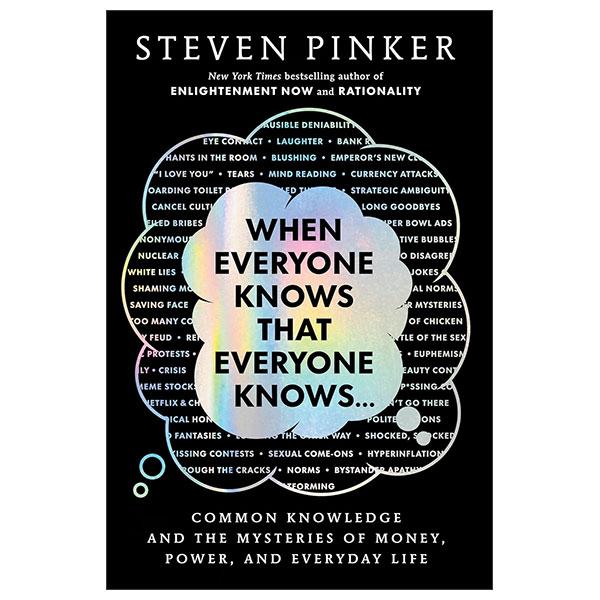
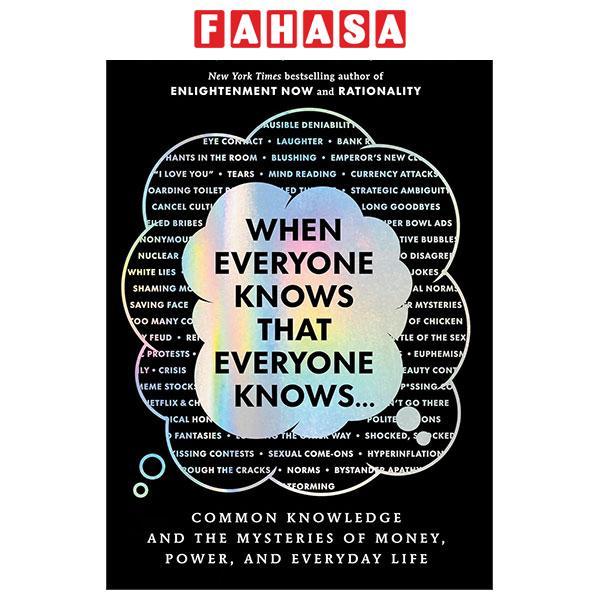
when everyone knows that everyone knows…
**selected by bill gates as one of five books to read this winter**
from one of the world’s most celebrated intellectuals, a brilliantly insightful work that explains how we think about each other’s thoughts about each other’s thoughts, ad infinitum. it sounds impossible, but steven pinker shows that we do it all the time. this awareness, which we experience as something that is public or “out there,” is called common knowledge, and it has a momentous impact on our social, political, and economic lives.
common knowledge is necessary for coordination, for making arbitrary but complementary choices like driving on the right, using paper currency, and coalescing behind a political er or movement. it’s also necessary for social coordination: everything from rendezvousing at a time and place to speaking the same language to forming enduring relationships of friendship, romance, or authority. humans have a sixth sense for common knowledge, and we create it with signals like laughter, tears, blushing, eye contact, and blunt speech.
but people also go to great lengths to avoid common knowledge―to that even if everyone knows something, they can’t know that everyone else knows they know it. and so we get rituals like benign hypocrisy, veiled bribes and threats, sexual innuendo, and pretending not to see the elephant in the room.
pinker shows how the hidden logic of common knowledge can make sense of many of life’s enigmas: financial bubbles and crashes, revolutions that come out of nowhere, the posturing and pretense of diplomacy, the eruption of social media shaming mobs and academic cancel culture, the awkwardness of a first date. artists and humorists have long mined the intrigues of common knowledge, and pinker liberally uses their novels, jokes, cartoons, films, and sitcom dialogues to illuminate social life’s tragedies and comedies. along the way he answers questions like:
why do people hoard toilet paper at the first sign of an emergency? why are super bowl ads filled with ads for crypto? why, in american presidential primary voting, do citizens typically select the candidate they believe is preferred by others rather than their favorite? why did russian authorities arrest a protester who carried a blank sign? why is it so hard for nervous lovers to say goodbye at the end of a phone call? why does everyone agree that if we were completely honest all the time, life would be unbearable?
consistently riveting in explaining the paradoxes of human behavior, when everyone knows that everyone knows… invites us to understand the ways we try to get into each other’s heads and the harmonies, hypocrisies, and outrages that result.
Giá sản phẩm trên Tiki đã bao gồm thuế theo luật hiện hành. Bên cạnh đó, tuỳ vào loại sản phẩm, hình thức và địa chỉ giao hàng mà có thể phát sinh thêm chi phí khác như phí vận chuyển, phụ phí hàng cồng kềnh, thuế nhập khẩu (đối với đơn hàng giao từ nước ngoài có giá trị trên 1 triệu đồng).....
Hình ảnh sản phẩm

Giá MYST
Thông tin chi tiết
| Công ty phát hành | Simon and Schuster |
|---|---|
| Nhà xuất bản | Scribner |
| Ngày xuất bản | 2023-12-21 14:00:00 |
| ISBN-13 | 9781668212585 |
| Kích thước | 22.9 x 15.3 x 2.4 cm |
| Loại bìa | Bìa mềm |
| Phương thức giao hàng Seller Delivery | Nhà bán giao hàng cho khách hàng |
| SKU | 5373293797378 |
Từ khóa
english books spanish mèo mốc zarathustra đã nói như thế grain brain thích nhất hạnh educated luật tâm thức chiêm tinh học nhập môn luat-tam-thuc-giai-ma-ma-tran-vu-tru eq vô cực tương lai sau đại dịch covid ơn giời freud trả lời từ vô hình đến hữu hình thai giáo từ trái tim tâm lý học đám đông không sợ chậm chỉ sợ dừng cân bằng cảm xúc cả lúc bão giông ikigai tâm lý học hành vi một ý niệm về nỗi buồn bạn không thông minh lắm đâu bỏ cũ thay mới peter pan hiểu sâu nghĩ thấu investment john c maxwell mba search inside yourself search inside yourself tiếng việt